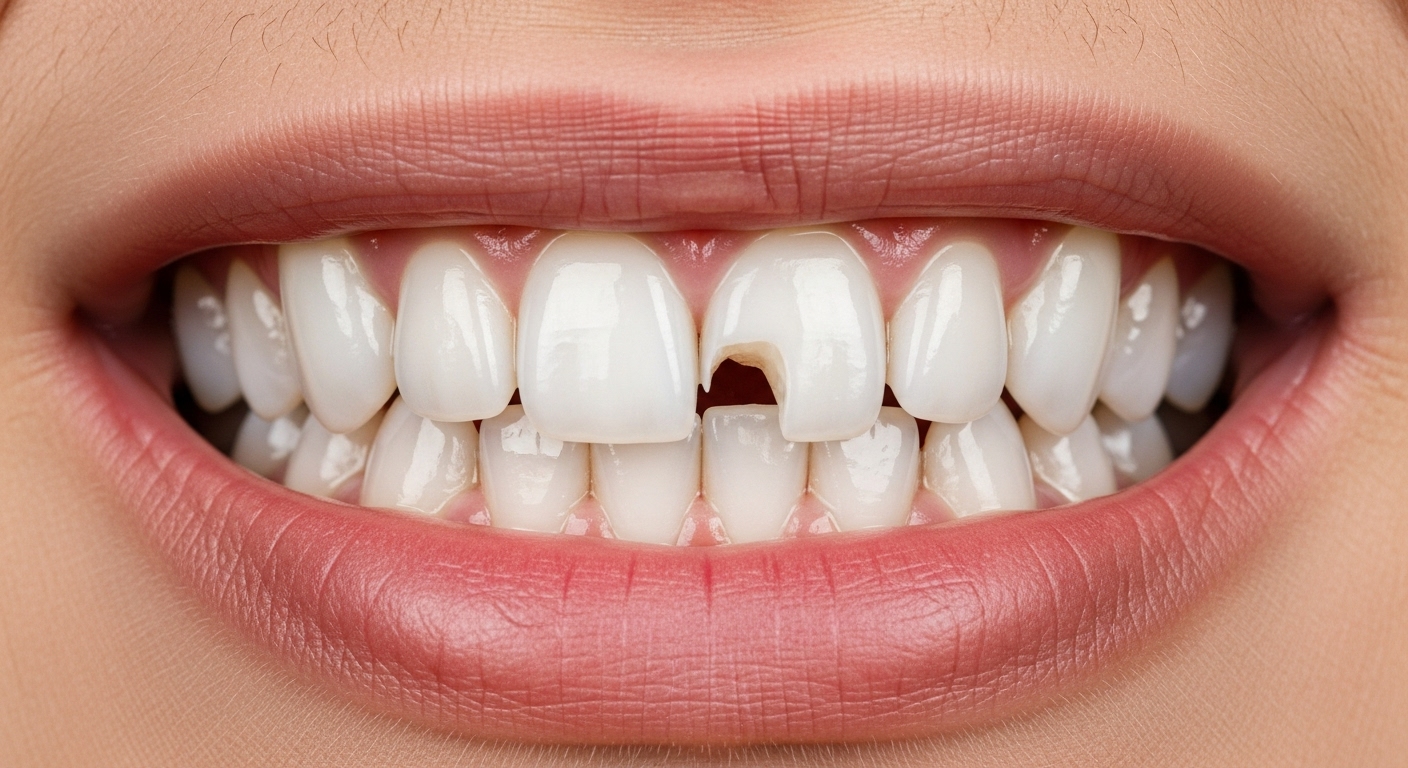
What to Do in Case of a Broken Tooth: Our Advice
No one is safe from dental trauma. In case of an accident, there are solutions to allow the reconstruction of a broken tooth or the reimplantation of a completely expelled tooth. Even if no immediate action could be taken, it is necessary to intervene quickly to avoid functional and aesthetic damage in the long term. What then are the possible causes of a dental fracture and what attitude should be adopted?
What can be the cause of a broken tooth?
Children are the most exposed to dental fractures, but adults can just as well undergo a shock or present dental wear. Here are the most frequent situations that can lead to a broken dentition:
- an internal lesion;
- a violent impact following a fight or an intense sports practice;
- an accident caused by a brutal fall;
- biting into food that is too hard;
- a fracture linked to chewing on a non-vital or decayed tooth;
- age, with progressive weakening of the enamel which loses its solidity;
- the presence of bruxism.
What should you do in case of a broken tooth?
Recover the tooth and preserve it
If you notice that a tooth has just broken, the first reflex is to recover the fragment. The next step is to preserve it in a suitable medium, ideally in your mouth in contact with saliva, while waiting for the dentist to reattach it. If this option is impossible, immerse it in UHT milk, physiological saline, or wrap it in plastic film. Indeed, the tooth is a living and sensitive element that must be handled with care. Also be careful not to touch the root if the tooth has been entirely expelled. It will be necessary to act quickly to relieve the pain and preserve the cells of your dentition.
Consult a dentist immediately
It is imperative to make a consultation appointment to receive treatment from a dental surgeon. The appointment must be made as quickly as possible after the fracture, in order to put the tooth back in place or to replace it. The practitioner will adopt the appropriate approach according to one of the following four scenarios:
- The tooth has been entirely expelled with its root. We can then consider an immediate reimplantation or the placement of a dental implant.
- The pulp is not affected and the fragment is recoverable: the dentist will proceed to glue the piece back using a composite or a suitable adhesive.
- The dental pulp is affected and/or the fragment is unusable: if the pulp is affected, the practitioner will devitalise the tooth and compensate for the loss of material with an inlay/onlay or a crown. If the pulp is intact, he will replace the missing fragment with a direct composite or with an inlay/onlay.
- The root is affected: the dentist will have no choice but to extract the remaining part of the tooth and place a crown on an implant.