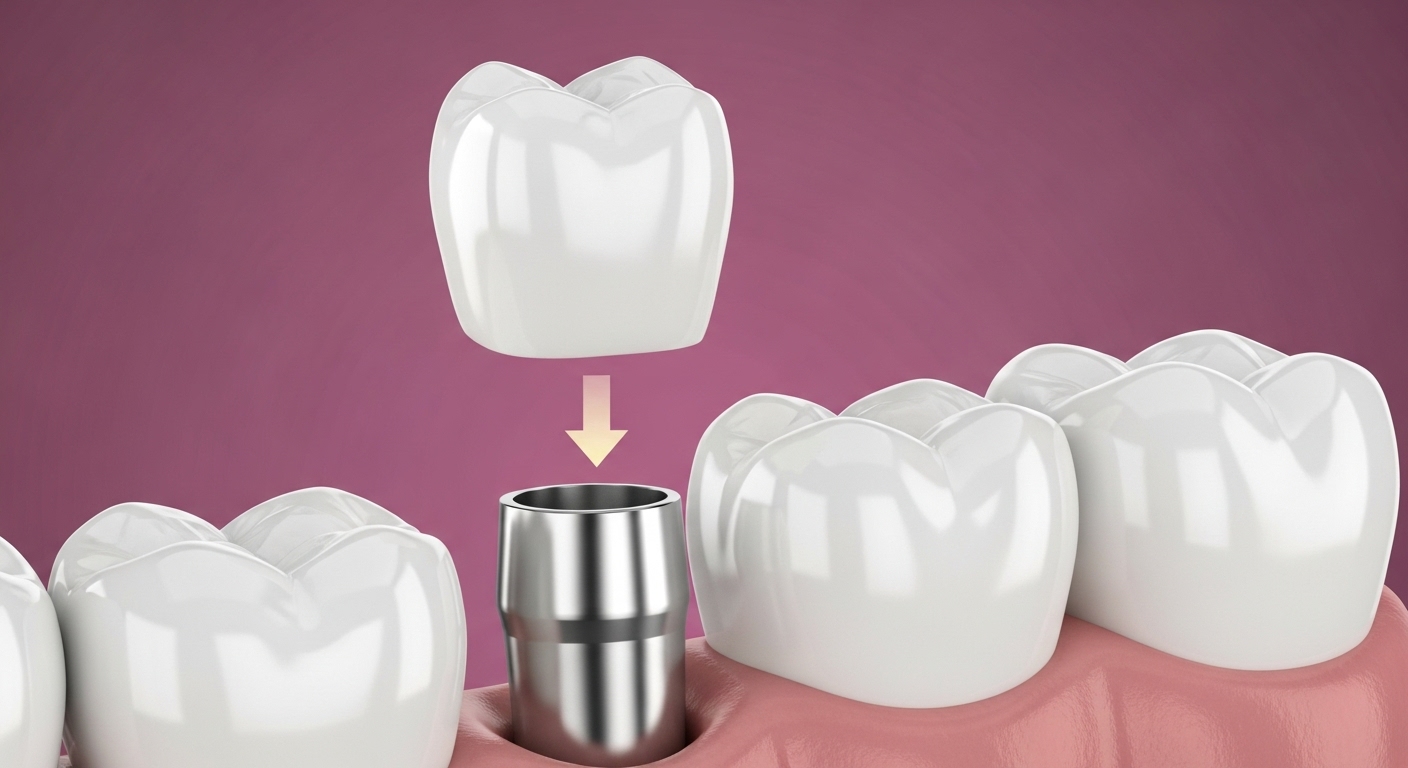
Dental Onlay: Definition, Cost, Lifespan & Procedure
A dental onlay is a modern prosthetic solution for restoring a tooth damaged by decay. More conservative than a crown and more durable than a simple composite filling, the onlay offers excellent stability and a natural appearance. Discover everything you need to know about this restoration technique.
Dental Onlay: Key Facts
- • Definition: Prosthetic piece that restores one or more surfaces of a decayed tooth
- • Cost: €200 to €800 depending on material and number of surfaces
- • Lifespan: 10 to 15 years (up to 12 years for ceramic)
- • Materials: Composite or ceramic (ceramic recommended)
- • Appointments: 2 visits required
What is a dental onlay?
An onlay is a prosthetic piece that allows your dentist to restore a tooth after treating decay. This technique ensures the filling and aesthetic restoration of your damaged tooth's appearance.
More modern than old amalgam fillings, the onlay can be placed on anterior or posterior teeth, using composite or ceramic materials. The quality of materials used and the stability of the piece are crucial for ensuring a good lifespan.
Why and when to get an onlay?
When a tooth is damaged by decay and a dental cusp needs to be restored, a dental onlay allows you to:
- Protect the inner part of the tooth: the dentin and root canal
- Restore normal shape: anatomical reconstruction of the tooth
- Preserve healthy tissue: unlike a crown, the onlay is more conservative
This prosthesis is made following treatment of the initial decay. It represents an ideal alternative between a simple composite (for small cavities) and a dental crown (for severely damaged teeth).
Should you choose a composite or ceramic onlay?
The materials used directly influence the aesthetic, functional results and lifespan of the prosthetic piece.
Composite resin onlay
Composite is a resin applied directly or indirectly to the tooth to fill the cavity and restore a functional cusp. This material has certain characteristics:
- Less resistant than ceramic
- Not recommended for large volume prostheses
- Aesthetic appearance less satisfactory than ceramic
- Cost generally lower
Ceramic onlay
Ceramic is the material offering the most natural aesthetic appearance and best mechanical resistance. Made of mineral material, it has several advantages:
- Excellent protection of healthy tissues
- Reduced fracture risk
- Natural aesthetics: shade and translucency close to enamel
- Superior lifespan: 10 to 12 years on average
| Criteria | Composite Onlay | Ceramic Onlay |
|---|---|---|
| Aesthetics | Good | Excellent |
| Resistance | Medium | Very high |
| Lifespan | 5-8 years | 10-15 years |
| Cost | €200-400 | €400-800 |
How is an onlay placed on a molar?
Creating an onlay generally requires two appointments with your dentist:
First appointment: Preparation and impression
- Diagnosis and medical history: Your dentist collects your dental and general medical history (diabetes, allergies, etc.)
- Decay treatment: Removal of decayed tissue, preserving only healthy tissue
- Impression taking: Made with silicone or a digital optical camera
- Transmission to the lab: The impression is sent to the dental prosthetics laboratory
Laboratory work
The dental technician, with the color references and cavity shape to restore, will create a wax model of the future prosthesis or perform a simulation using the digital model (CAD/CAM).
Second appointment: Fitting and bonding
- Onlay fitting: Checking the seal and congruence of support surfaces
- Occlusion check: Bite stability to reduce pressure on walls
- Surface preparation: Etching and adhesive application
- Permanent bonding: Fixing the onlay to your tooth
What is the cost of a dental onlay?
Depending on the number of surfaces to restore and the material used, the cost of an onlay can vary from €200 to €800.
- Composite onlay: €200 to €400
- Ceramic onlay: €400 to €800
A quote will be provided at your first appointment, corresponding to the chosen solution. It's important to know that French Social Security reimbursement is low, but your supplementary health insurance will complement this amount.
What is the lifespan of an onlay?
Depending on the quality of restoration, technique and material used, an onlay's lifespan can reach up to fifteen years.
- Ceramic onlay: 10 to 12 years on average
- Composite onlay: 5 to 8 years
Longevity also depends on your oral hygiene, eating habits and possible presence of bruxism (teeth grinding).
What to do if your onlay breaks or falls off?
If the prosthetic piece falls off
It's advisable to quickly make an appointment with your dentist to have it re-bonded as soon as possible. This will prevent exposing your fragile tissues to the risk of new decay forming.
If the prosthesis is lost
Similarly, it will be necessary to quickly create a new onlay to protect the tooth.
⚠️ Important: Don't delay consulting if your onlay becomes loose. An unprotected tooth is vulnerable to bacteria and new decay.
What's the difference between an onlay and a crown?
An onlay restores a tooth that is less damaged than when a dental crown is necessary.
- Onlay: Restores one or more surfaces of the tooth, preserves more healthy tissue
- Crown: Completely covers the tooth, requires more extensive preparation
A crown may also require prior placement of a post and core for a post crown restoration.
What's the difference between an inlay and an onlay?
The difference lies in the extent of restoration:
- Inlay: Minor restoration, located within the grooves of the dental crown
- Onlay: Larger prosthetic piece, aimed at reconstructing one or more surfaces of the tooth (cusps)
In summary, an inlay fills a simple cavity while an onlay also reconstructs the tooth's contours.
Frequently Asked Questions About Dental Onlays
Is getting an onlay painful?
No, onlay placement is done under local anesthesia. You won't feel any pain during the procedure. Some slight sensitivity may occur in the following days, but it disappears quickly.
Can you eat normally with an onlay?
Yes, once the onlay is bonded and the anesthesia has worn off, you can resume normal eating. However, avoid very hard or sticky foods for the first 24 hours.
Is the onlay visible?
A ceramic onlay is virtually invisible as it reproduces the natural shade and translucency of enamel. The aesthetic result is excellent, even on visible teeth.
What is the French Social Security coverage?
Reimbursement by French Health Insurance is low for onlays. However, your supplementary insurance can significantly complement this coverage. Ask your dentist for a quote to submit to your health insurance.
Onlay or direct composite: which to choose?
For small cavities, a direct composite may suffice. For larger cavities affecting one or more cusps, the onlay offers better resistance and superior lifespan.
Conclusion
The dental onlay represents a modern, aesthetic and durable restoration solution for teeth damaged by decay. More conservative than a crown and more resistant than a simple composite, it often constitutes the best compromise for preserving your dental capital.
Key points to remember:
- Ceramic onlay offers the best durability (10-15 years)
- Cost varies from €200 to €800 depending on material
- Two appointments are required for completion
- If it becomes loose, consult your dentist promptly
Need a dental onlay?
Book an appointment with a dentist for a personalized diagnosis.
Find a dentist