What is Invisalign Treatment? Complete System Guide
The era of orthodontics synonymous with "metal smile" is long gone. Nowadays, the demand for discreet treatments is greater than ever, especially for adult orthodontics. The most popular solution is undoubtedly the Invisalign system. Let's analyze in detail what it is and how it works.
How does Invisalign technology work?
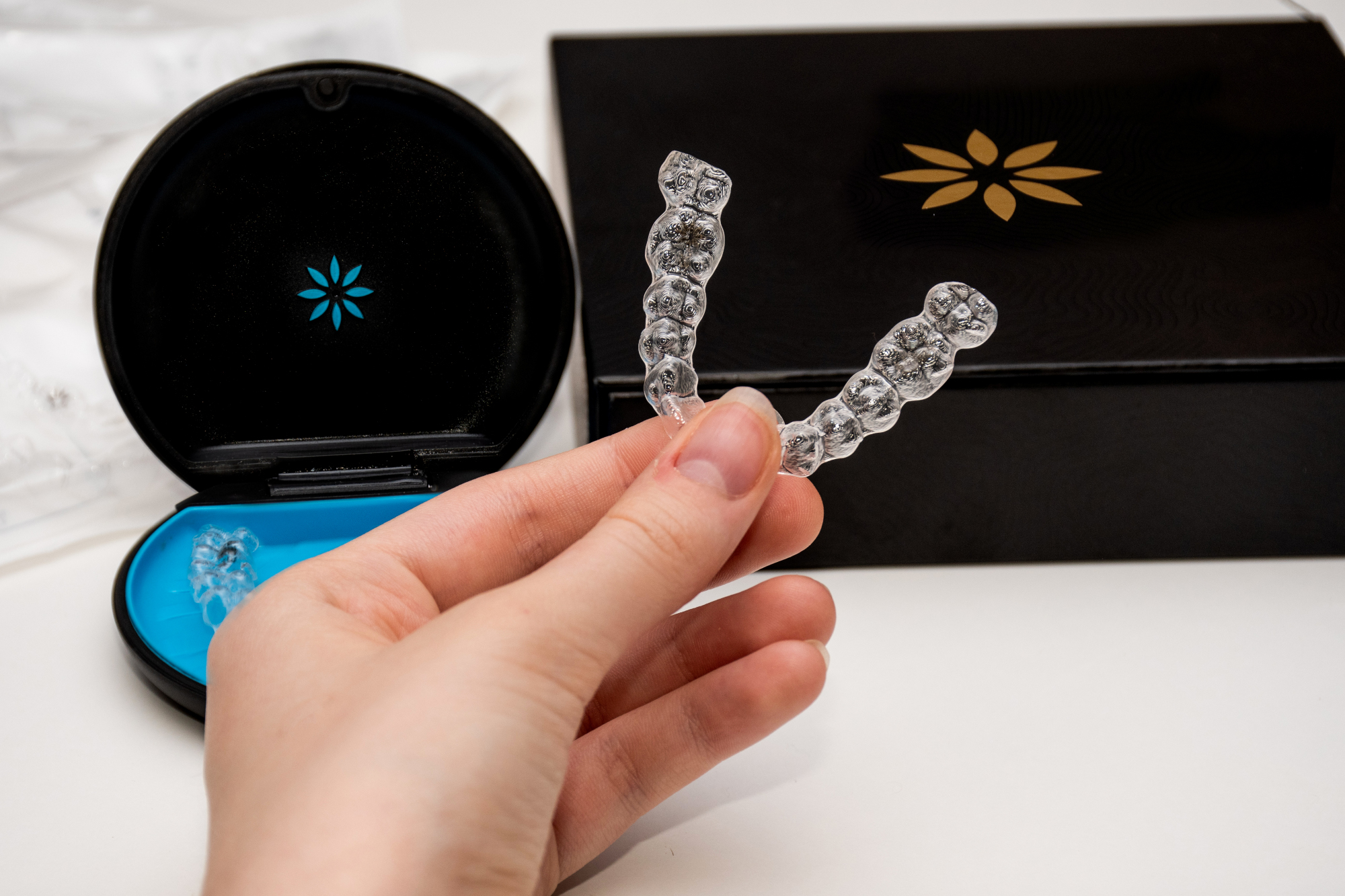
The Invisalign system is a cutting-edge orthodontic method that aligns teeth without using traditional braces. It employs a series of clear plastic trays (or "aligners"), custom-made for each patient. These aligners are made from a patented material, SmartTrack™, which is a multi-layer polyurethane resin specially designed to optimize tooth movement, offering superior comfort and better control. Each aligner is worn for one to two weeks, applying gentle and targeted pressure to gradually guide teeth to their final position. This journey is meticulously planned by your practitioner using 3D modeling software, ClinCheck, which allows you to visualize the complete treatment plan before even starting.
What alignment issues can Invisalign correct?
Thanks to its technological advances, the Invisalign system can treat a wide range of orthodontic problems, from the simplest to the most complex cases. Here are the most frequently treated malocclusions:
- Crowding: When teeth lack space on the arch and overlap.
- Gaps (diastemas): To close "gap teeth" or other spaces.
- Overbite: When the upper teeth cover the lower teeth too much.
- Underbite: When the lower jaw is forward relative to the upper jaw.
- Crossbite: When some upper teeth close inside the lower teeth.
Only a certified Invisalign orthodontist can confirm, after a thorough examination, if your case is suitable for this type of treatment.
What makes Invisalign different from other appliances?
Invisalign stands out from other options through its unique combination of clinical effectiveness and quality of life.
Invisalign vs. Traditional Braces
The most striking difference is aesthetics. Invisalign aligners are virtually invisible, while traditional appliances, even ceramic ones, have visible brackets and wires. However, the fundamental difference is that the aligners are removable. This allows you to remove them to eat, brush your teeth and floss without any constraints. This freedom offers a level of hygiene and comfort that a fixed appliance cannot provide.
Invisalign vs. Lingual Braces
Lingual orthodontics is another "invisible" alternative where brackets are bonded to the inner surface of the teeth. Although it is the only 100% invisible technique, it has its drawbacks. Lingual braces can cause notable tongue irritation and speech difficulties, especially at first. Their maintenance is also more complex. Invisalign is generally considered more comfortable and more practical on a daily basis.
Comparison: Invisalign vs. Lingual
Here is a summary to better visualize the major differences:
- Aesthetics: Slight advantage to lingual braces (completely hidden), but Invisalign is a very close second (almost imperceptible).
- Comfort: Clear advantage to Invisalign (no irritation, removable).
- Hygiene & Eating: Major advantage for Invisalign (you remove the appliance).
- Discipline: Advantage to lingual braces (fixed, so no forgetting possible). Invisalign requires rigor to be worn 22 hours a day.
- Cost: Advantage to Invisalign, which is often less expensive than fully custom lingual braces.
Conclusion: How to make your choice?
The decision between Invisalign and other options depends on your priorities. If total invisibility is your only criterion and budget is not a limiting factor, lingual orthodontics can be considered. On the other hand, if you prioritize comfort, practicality, and controlled cost, Invisalign probably represents the best solution for you.
In any case, only a qualified orthodontist can, after a complete assessment, guide you to the solution best suited to your teeth and your goals.
Ready to start your Invisalign treatment?
Find a certified Invisalign orthodontist near you with our interactive map of orthodontists in Cannes and the French Riviera.
Find an orthodontist