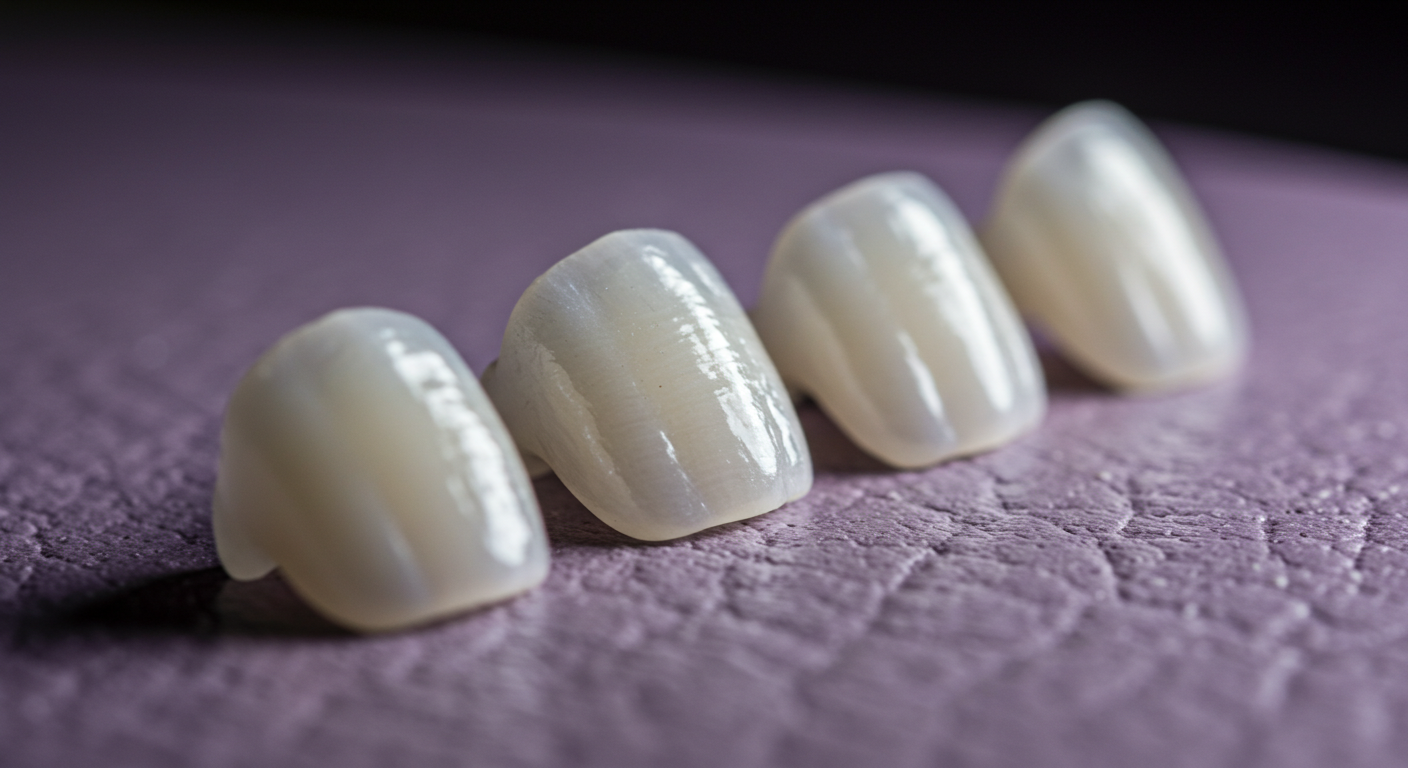
Dental Composite: Types, Cost, Lifespan & Procedure
Tooth restoration using composite has now replaced the use of amalgam, particularly due to its natural resemblance to enamel. Many treatments are available to address various clinical situations.
Dental Composite: Key Facts
- • Definition: Biomaterial for restoring teeth
- • Types: Aesthetic, posterior, flowable, Bulk Fill, universal
- • Lifespan: 5 to 12 years
- • Advantages: Natural aesthetics, metal-free
- • Insurance: Covered by French Social Security
What is dental composite resin?
Composites are biomaterials used by dentists to restore the shape and function of missing dental tissue. They can be applied directly to the tooth surface, unlike ceramics, and therefore allow great flexibility.
Different composites exist with different mechanical and aesthetic properties:
- Macroparticle composites
- Microparticle composites
- Hybrid composites
When should a tooth be restored with composite?
When a tooth needs to be restored, composite resin allows the practitioner to achieve a natural shape and color. Composites are widely used in the following situations:
- Filling a cavity following treatment of decay
- Replacing an amalgam
- Replacing an old, damaged, cracked or broken treatment
- Restoring the shape of a tooth that has suffered acid erosion or tooth wear due to significant bruxism
- Correcting a localized enamel defect, particularly at the dental cervical area
- Addressing the morphological consequences of dental fractures
- Harmonizing the shape of dental arches
- Improving the aesthetic appearance of a tooth
Dental filling with composite resin
After treating decay, a more or less significant volume of enamel and possibly dentin may have been removed. To protect the remaining tissue and restore normal occlusal function, it is important to perform a filling.
When an indirect inlay/onlay/overlay is not necessary, a simple dental composite filling is an ideal solution.
Composite veneers
Composite veneers can be a temporary or permanent solution to correct the appearance of the smile. Their characteristics:
- Lower cost than ceramic veneers
- Direct application on the patient's teeth using custom-made keys with digital technologies
- Lesser aesthetic appearance compared to ceramics
- Lower mechanical resistance due to lower mineral filler content
What are the different types of composites?
Anterior aesthetic composites
In the anterior sector, aesthetic constraints are numerous, particularly in terms of shade, translucency and light reflection. Multiple materials are available for creating composite veneers. These composites allow changing the color, morphology and size of the tooth without needing to grind dental tissue.
Posterior composites
These biomaterials are designed for restoring molars and premolars. They have an organic matrix design and mineral filler adapted to significant chewing pressures to ensure a long lifespan.
Flowable composites
Flowable composites have very high fluidity and are therefore perfectly suited for filling small cavities and fissures. Dental treatments with flowable composite are therefore very easy and have many advantages.
Bulk Fill composites
Bulk Fill composites allow application of a significant layer of material thanks to their high sensitivity to photopolymerization. The number of layers to apply will therefore be reduced and the practitioner's treatment faster.
Universal composites
Universal composite allows aesthetic treatment of posterior and anterior teeth thanks to various available shades. Their use is very widespread and allows many treatments to be performed.
Self-curing composites
Composites normally undergo a chemical hardening reaction to UV light called photopolymerization. Some composites do not require this step and therefore allow certain restorations in poor positions or when the volume of biomaterial to apply is very large.
Is it possible to whiten teeth with composite?
Many patients wish to undergo teeth whitening despite the presence of composite restorations in their mouth. Unfortunately, whitening products have no effect on composites which will therefore need to be replaced after treatment.
How to replace an amalgam with dental composite?
Dental amalgam or fillings are increasingly less common and old treatments are now being replaced with more discreet and suitable treatments.
When the amalgam to be replaced is small, your dentist can easily perform a composite restoration. For larger amalgams, ceramic will be more suited to mechanical stress.
When removing the filling, particular attention will be paid due to the potential toxicity of metals (including mercury, now banned) previously used. The treatment will therefore be performed under a dental dam with significant suction.
Can a broken composite be redone?
It is entirely possible to reapply composite to an old broken restoration. If the patient complains of repeated breakage of the restoration, it will then be necessary to reassess the choice of composite versus a more resistant material like dental ceramic.
What is the cost and insurance coverage for dental composite?
Due to the very wide variety of dental composite treatments available, it is not possible to give the cost of a restoration or generic reimbursement. This rating depends on:
- The anterior or posterior location of the treatment
- The number of surfaces to restore
- Other treatments performed
However, apart from aesthetic improvements like veneers, tooth restoration is always covered by French Social Security, more or less completely. A quote will be provided before your treatment begins which you can send to your insurance for details of available reimbursement.
What is the lifespan of a composite?
Depending on oral hygiene, eating habits, presence or absence of bruxism and general maintenance of restorations, the lifespan of a composite is 5 to 12 years.
Regular check-up visits to your dentist as well as regular tooth brushing, preferably with a vibrating toothbrush, help maintain the initial appearance of the treatment.
Frequently Asked Questions About Dental Composite
Why perform a composite at the dental cervical area?
When dentin exposures are present at the tooth cervical area, applying a thin layer of dental composite protects the dentin and thus greatly reduces pain felt by the patient. These treatments are particularly performed for gum recession or significant bruxism.
Why doesn't my dental composite hold?
When mechanical stresses are too high on the biomaterial, it tends to break or come loose. It is then important to check contacts between the arches or, when the restoration is significant, consider using porcelain ceramic, which is more resistant.
When should a composite be changed?
A composite can be changed when its aesthetic appearance is no longer satisfactory, due to product aging. Lifespan can vary from five to twelve years depending on applied stresses and the patient's oral hygiene. The polished appearance of the composite can be altered depending on eating habits. Similarly, nail biting or biting objects greatly alters the material.
How is a dental composite placed?
The dental appointment proceeds in several steps:
- Shade matching
- Anesthesia depending on tooth vitality and patient sensitivity
- Placement of a dental dam to isolate the tooth from saliva
- Preparation of the tooth surface by etching
- Rinsing and adhesive application
- Possible placement of a matrix to recreate the tooth shape
- Layered application of composite material and photopolymerization
- Checking occlusion and contact points
- Polishing the composite according to desired effect
Conclusion
Dental composite has become the reference material for dental restorations thanks to its natural aesthetics and versatility. It advantageously replaces old amalgams and allows treatment of many clinical situations.
Key points to remember:
- Lifespan of 5 to 12 years depending on maintenance
- Several types adapted to each situation
- Covered by French Social Security
- Must be replaced after teeth whitening
Need a composite restoration?
Book an appointment with a dentist for a personalized diagnosis.
Find a dentist