Everything You Need to Know About Wisdom Teeth
A legacy from our hunter-gatherer ancestors, wisdom teeth served humanity for chewing raw meat long before mastering fire. Today, these third molars have become superfluous and are the source of many oral health problems.
Indeed, their eruption is often synonymous with acute pain and can cause displacement of other teeth. Are you experiencing wisdom tooth pain and don't know how to react? Are you considering having them removed?
Discover everything you need to know about wisdom teeth and the right reflexes to adopt in case of pain.
Wisdom teeth: what are we talking about?
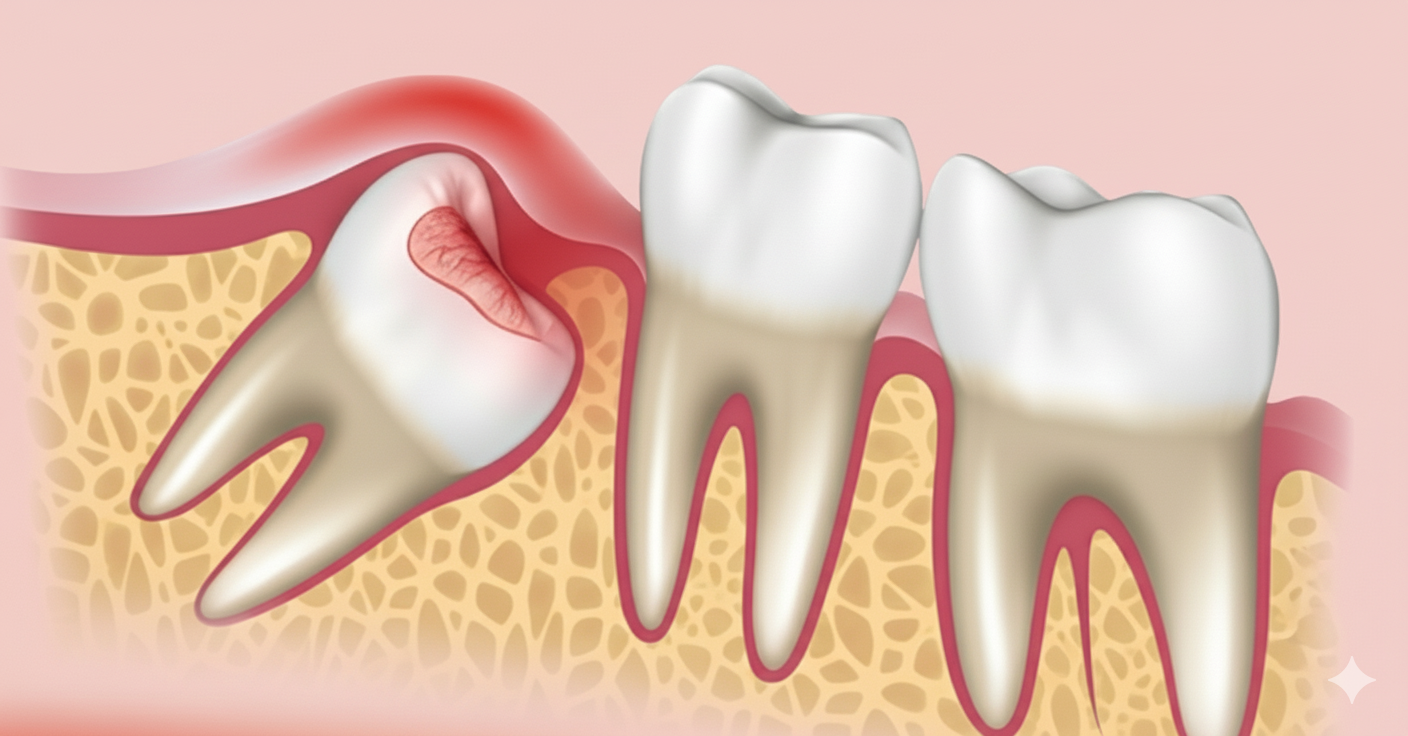
Wisdom teeth owe their name to their late appearance, generally occurring at the end of adolescence, a period considered the "age of wisdom". Positioned at the very back of the dental arch, behind the second molars, they can present very varied shapes, sizes and orientations.
Unlike other teeth, they no longer serve any purpose for chewing. Over millennia, our diet has evolved and the human jaw has shrunk. Wisdom teeth are therefore no longer adapted to the modern human mouth.
In most cases, their eruption axis is not correct, meaning they are not well aligned. Even when their position is good, they often lack space to develop properly. This explains why their extraction is such a common operation.
Wisdom tooth pain: what to do?
Many pains and symptoms can be linked, directly or indirectly, to wisdom teeth:
- Gum inflammation: swelling or bleeding of the gum (pericoronitis, gingivitis).
- Infections: cavities on the wisdom tooth or neighboring tooth, difficult to clean.
- Joint pain: temporomandibular joint pain can radiate into the jaw and trigger headaches.
- Abscess: localized infection with pus discharge at the tooth.
- Other symptoms: difficulty swallowing, swollen lymph nodes, cyst formation.
- Complications: displacement of other teeth, involuntary jaw contraction (trismus).
To avoid these situations, it is often advisable to remove impacted or semi-impacted (poorly positioned) wisdom teeth around age 18. If an infection, lack of space or abnormal pain occurs, extraction will also be proposed to prevent risks.
How does wisdom tooth extraction work?
Before the operation, the dentist takes a panoramic X-ray to prepare the procedure and assess its difficulty. They also inform the patient about post-operative effects.
The procedure lasts on average less than two hours and can be performed under local or general anesthesia. Depending on the case, the practitioner may extract all four teeth at once or proceed in two stages.
When the tooth is not visible, the dentist incises the gum to expose it before performing the extraction. They then suture the wound with most often resorbable stitches. A prescription (painkillers, mouthwash) is given to the patient with post-operative advice.
How to recover well after the operation?
After an extraction, it is crucial to follow certain recommendations for rapid healing. Scrupulously follow the prescription, especially taking painkillers. Applying ice to your cheek helps limit swelling and pain.
It is important to drink plenty of water, avoiding alcohol and hot drinks. Do not use a straw, as suction can dislodge the blood clot essential for healing.
For food, favor soft and cold or lukewarm foods (yogurts, compotes, soups). Tobacco consumption is strongly discouraged as it seriously harms healing.
Warning: do not brush your teeth or use mouthwash on the day of the procedure. Resuming brushing should be very gentle. Finally, plan at least one day of rest and avoid any intense physical activity for a week.
Pain or Doubt? Consult a Professional.
Wisdom tooth extraction is a common procedure but requires an accurate diagnosis. Don't wait for the pain to set in before seeking advice.
Find a dentist near you