Everything You Need to Know About Oral Thrush: Causes, Symptoms and Treatments
What is oral thrush?
Oral thrush, also referred to as oral candidiasis or oral fungal infection, is a common fungal infection of the mouth caused by the excessive multiplication of the fungus Candida albicans in the oral cavity.
Although this fungus is naturally present in the body, including within the oral flora, it can generate unpleasant symptoms as soon as it develops in an uncontrolled way.
Oral thrush can affect all age groups, but it is more often observed in infants, young children, the elderly and adults with a weakened immune system.
What are the causes of oral thrush?
Oral candidiasis can have several origins. The proliferation of Candida albicans in the body is accentuated by a weakened immune system, notably in patients with chronic infections, HIV, or in those following anti-cancer, antibiotic or corticosteroid treatments.
Insufficient oral hygiene can create a favourable ground for the multiplication of fungi. The accumulation of dental plaque and food debris can favour the infection; the same is true for the wearing of dentures and the presence of lesions on the mucous membranes.
Candidiasis can also appear during pregnancy.
Finally, diabetes constitutes a risk factor associated with oral thrush, particularly when blood sugar is poorly controlled. High sugar levels in saliva favour an environment where Candida develops easily.
What are the symptoms of oral thrush?
Oral thrush results in several signs whose intensity varies according to the severity of the infection.
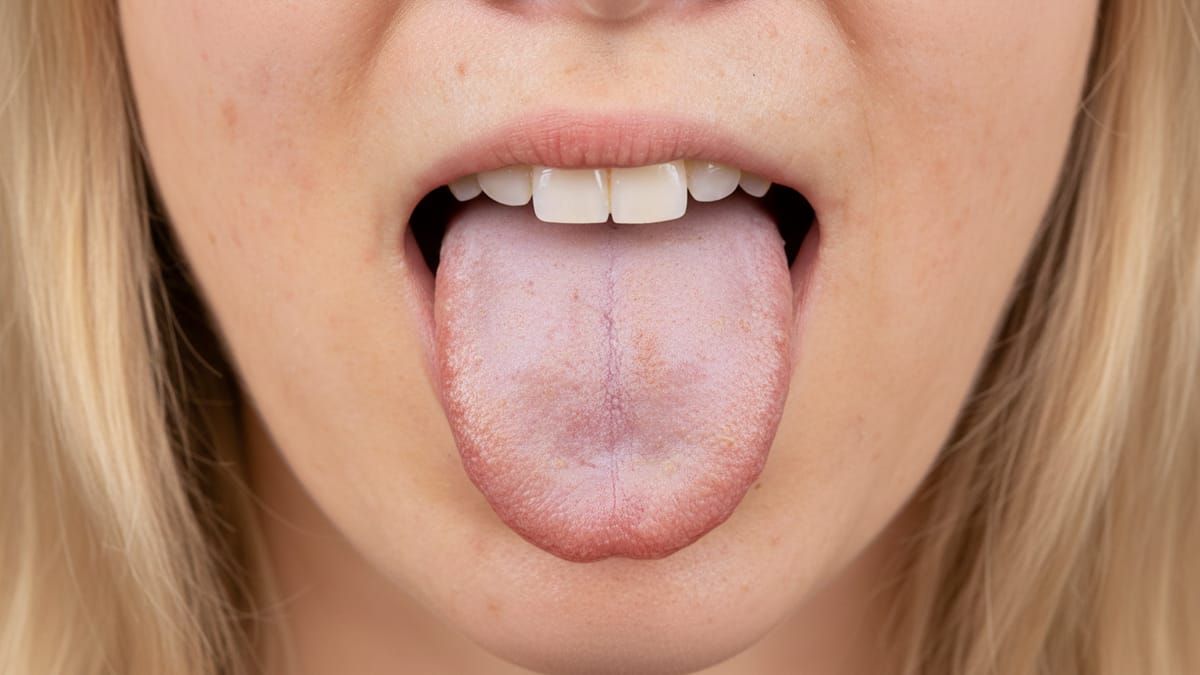
The infection frequently manifests itself with white or yellowish patches in the mouth. These deposits are often described as having a creamy texture, similar to cottage cheese, which form on the tongue, the inside of the cheeks, the palate and the gums.
When scratched, these patches may reveal reddish areas, sometimes painful and which bleed easily.
Oral thrush may also cause a sensation of burning or pain, particularly during meals or when drinking. This discomfort can extend to the throat, making swallowing painful and uncomfortable.
Dry mouth, called xerostomia, is also frequent, as the infection can affect the salivary glands and reduce the production of saliva.
This oral disease can lead to a loss or alteration of taste, called ageusia. Most often, food seems to have an altered, often bland, flavour, and the patients concerned may also feel a metallic and bitter taste in the mouth.
The symptoms of oral thrush in breastfeeding women
A breastfeeding woman can contract oral thrush and transmit it to her child. The signs are then different: shininess of the areola, redness of the nipples, unusual sensitivity and pain during breastfeeding.
What are the possible treatments for oral thrush?
Several approaches make it possible to treat oral thrush. The objective of the treatment is to eliminate the fungal infection and to restore the balance of the oral flora. Depending on the patient's profile, the doctor or dentist will prescribe an appropriate treatment at the time of diagnosis.
The administration of antifungal medications generally constitutes the first therapeutic option, as it aims to combat the proliferation of the Candida fungus. These antifungals exist in different presentations: tablets, lozenges, gels or oral solutions.
Among the most commonly prescribed antifungals are fluconazole, nystatin and miconazole. The treatment must be followed for several days, or even a few weeks, and it is essential to take it through to its end in order to prevent any recurrence.
How to prevent oral infections?
To prevent oral infections and preserve flora, good oral hygiene is essential. Your dentist recommends brushing your teeth at least twice a day, preferably with a fluoride toothpaste, and flossing after meals to remove food debris that could favour the development of bacteria and fungi such as Candida albicans. Furthermore, the toothbrush must be replaced regularly (approximately every 3 months) to avoid the build-up of bacteria.
For denture wearers, their care must not be neglected. Dentures must be cleaned every day and must be correctly fitted to avoid irritation.
To prevent infections such as oral thrush, it is recommended to consult your dentist in Cannes at least once a year in order to benefit from a regular check-up and a professional cleaning of the teeth.