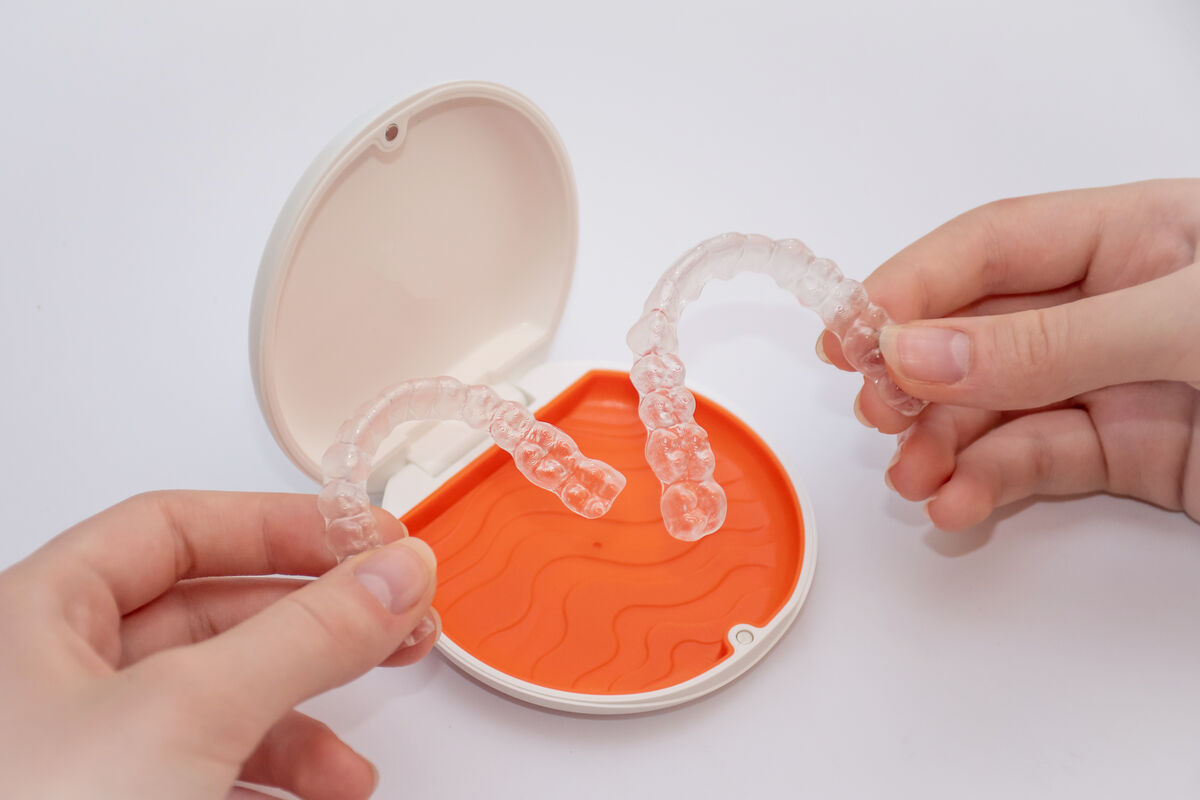
Keeping Teeth Straight After Invisalign: The Retention Guide
Congratulations, you've worn your last Invisalign aligner and your teeth are beautifully aligned! But the journey to a lasting smile isn't quite over yet. You're now entering an equally crucial phase: retention. This step will protect your investment and guarantee the permanence of your results.
Why is retention essential after treatment?
After months of treatment, your teeth occupy their new position, but the supporting tissues (alveolar bone and ligaments) need time to reorganize and consolidate. Teeth have a kind of "memory" and a natural tendency to want to return to their initial position: this is called relapse.
The retention phase fulfills a dual objective:
- Stabilize the result obtained by maintaining teeth in their ideal position while the bone support strengthens.
- Prevent long-term relapse and ensure your smile remains perfectly aligned for years to come.
Different post-treatment retention devices
There are mainly two types of retention appliances, which are often combined for maximum effectiveness.
Removable retainers: Vivera® aligners
Vivera is Invisalign's official retention system. These are clear aligners, very similar to your old aligners, but made from more robust and durable plastic.
- How it works: You generally receive a set of several pairs of Vivera aligners to anticipate their replacement.
- Benefits: They are precise, comfortable, removable (for eating and brushing teeth) and cover the entire dental arch.
- Wear protocol: Your practitioner will indicate the wear frequency. Most often, this starts with full-time wear for a few months, followed by night-only wear.
Fixed retention: bonded wire
This is a very thin metal wire bonded to the inner surface of the teeth (most often from canine to canine, top and bottom).
- How it works: The wire holds the front teeth in position, which are most prone to relapse.
- Benefits: It's completely invisible and permanent, so no risk of forgetting it. It offers constant security.
- Drawbacks: It requires rigorous hygiene, particularly for flossing which requires the use of floss threaders or interdental brushes.
The recommended approach: dual retention
Today, many orthodontists recommend a combined approach for optimal security: placing a permanent bonded wire AND wearing Vivera aligners at night. The wire ensures constant maintenance of anterior teeth, while aligners prevent micro-movements of other teeth and protect enamel in case of teeth grinding (bruxism).
How long should you wear retention appliances?
This is the question all patients ask. The specialist consensus is increasingly clear: for life. Teeth naturally move throughout our lives, whether we've had orthodontic treatment or not. Considering retention as the final and permanent phase of your treatment is the best way to preserve your smile and ensure you have straight teeth forever.
Conclusion: a final step never to be neglected
Retention is not just an option; it's the essential conclusion of your orthodontic journey. It's the guarantee that the efforts, time and investment you've made will be rewarded in the long term. By following your practitioner's recommendations, you ensure a beautiful and stable smile for a lifetime.
Ready to start your Invisalign treatment?
Find a certified Invisalign orthodontist near you with our interactive map of orthodontists in Cannes and the French Riviera.
Find an orthodontist