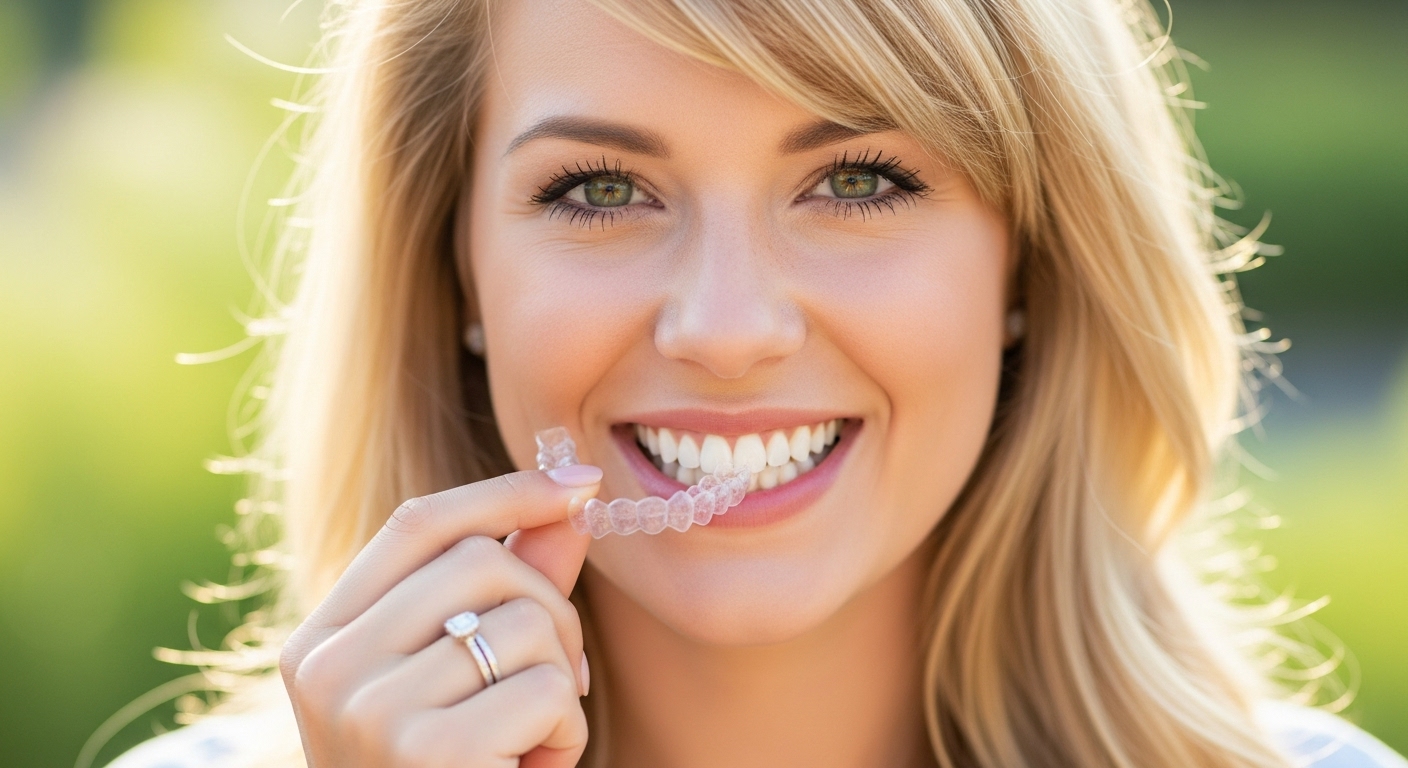
Correcting Crooked Teeth with Invisalign: Is It Effective?
Having teeth that overlap, are misaligned or "crooked" is a common concern for many people. Beyond aesthetics, malocclusion can have a significant impact on oral health. Fortunately, modern treatments like Invisalign provide effective solutions for achieving a smile that is both functional and harmonious.
Why is it important to correct misaligned teeth?
While the search for a beautiful smile is often the main driver, the benefits of dental alignment are much broader:
- Better hygiene: Well-aligned teeth are easier to clean, which reduces the risk of cavities and gum problems.
- Optimized chewing function: Good alignment allows better food chewing and can reduce certain jaw tensions.
- Prevention of tooth wear: Poor force distribution on mispositioned teeth can cause premature enamel wear.
- Better self-confidence: A harmonious smile directly and positively influences self-esteem.
Main types of dental malpositions
The expression "crooked teeth" encompasses several forms of malocclusions that Invisalign treatment can frequently correct.
Dental crowding
This is the most common scenario. Teeth lack space on the arch and end up overlapping. This situation complicates brushing and flossing, giving a "twisted" appearance to the teeth.
Gaps (diastemas)
Opposite to crowding, this problem occurs when there is excess space on the arch, creating gaps between teeth. The best-known example is "gap teeth."
Bite problems
This term refers to poor interlocking between the upper and lower jaws. The main types are:
- Overbite: Excessive coverage of lower teeth by upper teeth.
- Underbite: Lower teeth pass in front of upper teeth when closing.
- Crossbite: One or more upper teeth close inside the lower arch.
- Open bite: Absence of contact between upper and lower teeth when closing.
How does Invisalign correct crooked teeth?
Invisalign is a modern orthodontic treatment that has proven itself on a wide variety of malocclusions. It works through a series of clear aligners that exert gentle, planned forces to move teeth gradually.
Advanced technologies like attachments (SmartForce®) allow complex movements, making Invisalign a very serious alternative to traditional braces for many cases, even the most complicated ones.
And after treatment? The crucial role of retention
Once you've achieved beautifully straight teeth, the journey isn't quite over. To ensure results are stable long-term, a retention phase is absolutely essential. Without it, teeth have a natural tendency to return to their original position. Invisalign Vivera® retainers or a bonded wire are the most common solutions for making your new smile permanent.
Conclusion: a solution adapted to every smile
Whether it's simple dental crowding or a more complex bite problem, an orthodontic solution exists for you. Invisalign has established itself as a preferred choice for adults wanting to correct their teeth discreetly and comfortably. The first step is to consult a practitioner for an accurate diagnosis and personalized treatment plan.
Ready to start your Invisalign treatment?
Find a certified Invisalign orthodontist near you with our interactive map of orthodontists in Cannes and the French Riviera.
Find an orthodontist