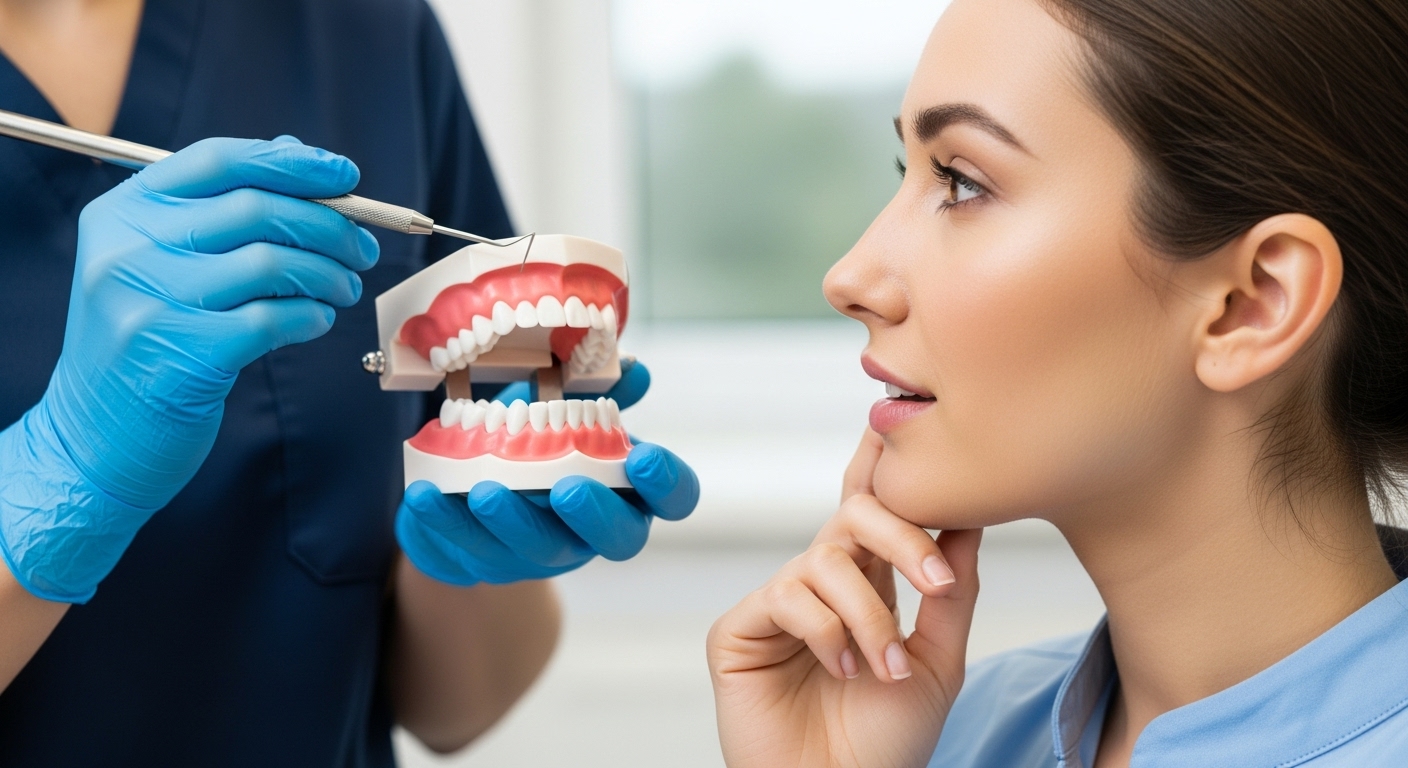
How to Treat Gum Recession?
Gum recession reflects a poor attachment of the tooth to the jaw, resulting from bone loss along the root and a recession of the gum. This loosening, linked to inflammation of the gum and bone (also called periodontitis), is said to affect on average 15 to 20% of people aged 35 to 44, according to the WHO. Although this disease is relatively common, it must not be underestimated. Its consequences can be disastrous and lead, in the most severe cases, to tooth loss. Here is the essential information you need to properly prevent the risks of this dental scourge.
Symptoms and triggering causes
In case of inflammation of the gum or gingivitis, it is advisable to consult a dentist as soon as possible to maximise your chances and reverse the process.
The symptoms that should alert you
The symptoms of gum recession are as follows:
- increased sensitivity of your teeth on contact with hot and cold;
- a feeling of the tooth becoming longer;
- abnormal gum bleeding when brushing;
- gums that recede and gradually reveal the root of the teeth;
- gaps that deepen between the teeth.
Here are several causes that may be at the origin of gum recession:
- The first factor is hereditary.
- A cavity, the build-up of dental plaque and then tartar, as well as poor hygiene — due to negligence or improper brushing — can also be at the origin of gum recession.
- Bruxism, that is, involuntarily grinding or clenching the teeth, can also encourage the appearance of this phenomenon.
- Tobacco consumption can also be the cause.
- With age, gums with reduced blood supply can lead to gingival recessions, then bone loss along the dental root.
- A disease or poor tooth alignment can also constitute a triggering factor.
- Diabetes, stress or even a vitamin C deficiency are rarer factors, but they can also favour the appearance of gingivitis.
Treatments for gum recession
A visit to the dentist
It is therefore imperative to make an appointment with your dentist without delay, as soon as you have the slightest doubt. They will examine your dentition by carrying out a panoramic X-ray. If it turns out that you do indeed have gum inflammation and a risk of gum recession, the dentist will put in place a curative treatment.
They will first carry out a complete scaling of your teeth, then a root planing intended to eliminate the bacteria and dental plaque that reside at the root of the teeth. These operations aim to recover a little bone and stabilise the disease by allowing the teeth to adhere again to the walls of the gum. After the intervention, you will most likely have to take antibiotics prescribed by the dentist to support the immune recovery process.
You will then have to return to the dentist every 3 months, then every 6 months, to check that the gum inflammation has indeed disappeared.
In case of recurrence, with bone loss responsible for periodontal pockets between the root and the gum, the dentist may propose an intervention under local anaesthesia which will allow a thorough disinfection of the tissues and a reinforcement of the gum's attachment against the root of the teeth.
When there is a loss of gum along the root, a gum graft can be considered, using gum tissue taken from the palate and held over the exposed root by a sutured flap of gingival mucosa covering the graft.
This procedure is performed under local anaesthesia at the dental practice.
All these techniques can be combined with regenerative techniques:
- the use of a collagen membrane, with or without bone grafts;
- regenerative materials such as Straumann Emdogain: a protein gel intended to fill the pockets formed by gum recession, which allows the regeneration of periodontal tissues (gum, bone).
Natural treatments
To fight against gum recession, you can turn to the following solutions:
- Coenzyme Q10: very effective for preventing and combating dental inflammation.
- Baking soda: it helps reduce dental inflammation.
- Green tea extract: its antioxidants are a major asset for fighting dental plaque.
- Aloe vera gel: it promotes healing and has anti-inflammatory properties.
- Avocado oil: an excellent anti-inflammatory.
- Grapefruit seed extract: used as a mouthwash, it offers many benefits thanks to its anti-inflammatory, antibacterial and antiparasitic virtues.
Laser treatment
To effectively treat the infection, it is also possible to resort to laser care. This will favour optimal healing in order to reattach the gum tissues to the teeth. The results are visible 1 week after the operation, without any particular pain or inconvenience following the intervention.
Solutions to prevent gum recession
To prevent the risks of gum recession, it is essential to preserve good oral hygiene in all circumstances. To do this, it is recommended to wash your teeth regularly (2 to 3 times a day) and to practise correct brushing using an appropriate brush: with soft bristles or an electric toothbrush (the latter removes more dental plaque). Favour a toothpaste for sensitive gums if the infection is already starting to manifest.
It is also advisable to use a mouthwash after brushing. This acts as a complement to eliminate bacteria and relieve pain — if present — thanks to its anti-inflammatory properties.
It is recommended to use dental floss daily to remove food residues and bacteria in the cavities. This habit can be supplemented by the use of interdental brushes or a water flosser.
Finally, a complete scaling at your dentist, twice a year, is recommended to keep your teeth healthy and prevent gum recession.