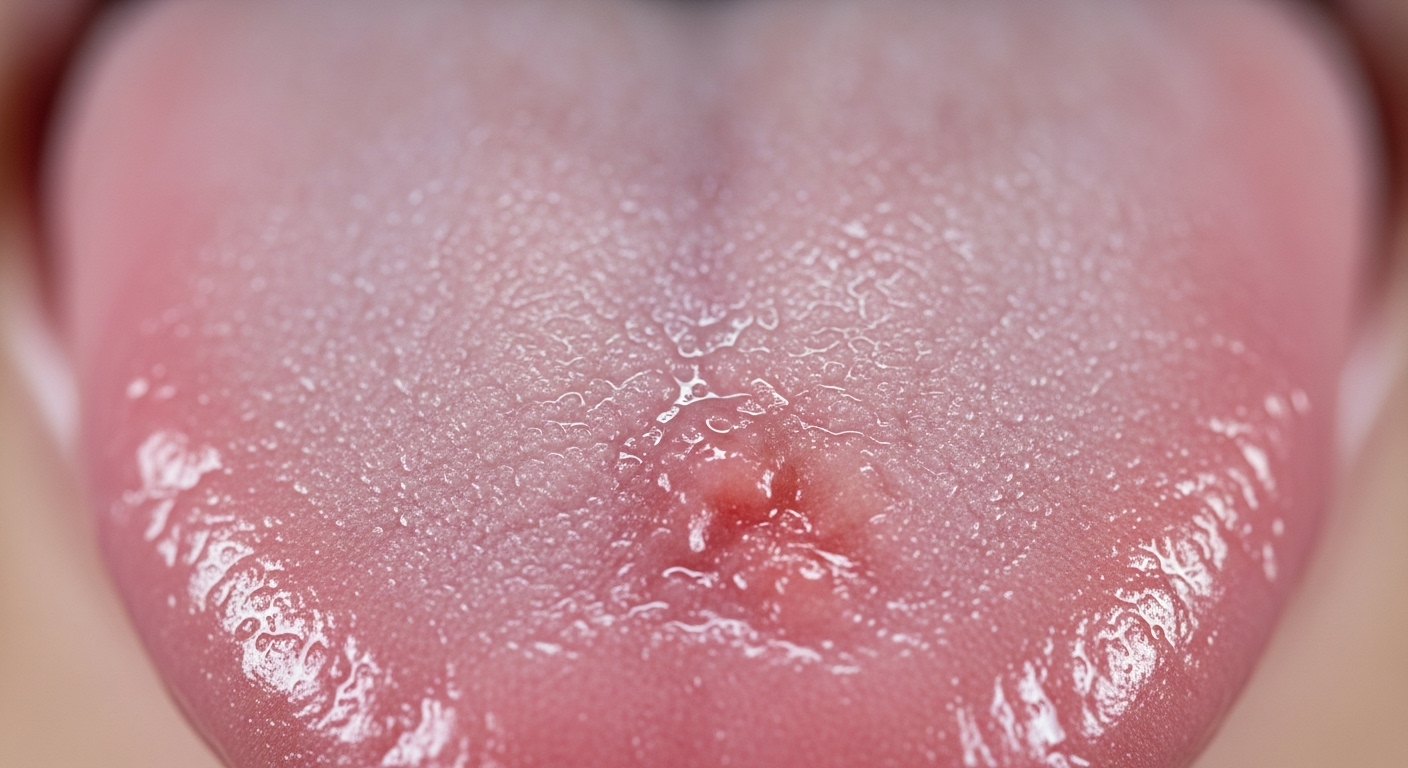
Glossitis: Symptoms, Causes and Treatments
Recognizable by the swelling of the tongue, glossitis is a form of inflammation that can prove particularly unpleasant. Sometimes associated with a change in the color of the tongue and a painful sensation, this condition can be explained by multiple factors. It is therefore useful to identify its origin and to know the possible treatments that can be put in place.
Types of glossitis and symptoms
Glossitis has the particularity of existing in several forms, each with its own symptoms and its own causes. Among these pathologies of the tongue are notably median rhomboid glossitis, which manifests as a red patch located in the center of the tongue — a benign problem, most often caused by a fungus. A painful, intensely red tongue, sometimes scattered with reddish vesicles, typically suggests atrophic glossitis associated with Biermer's disease (a form of anemia). Migratory exfoliative glossitis, for its part, is recognized by the formation of white patches on the surface of the tongue. It must be distinguished from herpetic glossitis, caused by oral herpes, which produces small circular spots that are clearly visible on the tongue.
In general, glossitis can be identified thanks to several common symptoms that quickly become troublesome for those affected. The tongue begins to hurt, changes color and becomes abnormally smooth. Spots or patches may form on it, and its progressive swelling eventually makes swallowing or speaking difficult.
A condition with multiple causes
Chronic glossitis frequently finds its origin in more serious pathologies, which cause disorders of the body including tongue swelling. This is the case with diabetes, scarlet fever or carcinoid syndrome, as well as Biermer's disease, Crohn's, Whipple's or even Cowden's disease, among others.
Allergies can also trigger occasional glossitis. An inflammatory reaction by contact is likely to lead to acute glossitis as well as difficulty breathing through the mouth. From one person to another, many foods or compounds can provoke such a reaction: spices, peanuts or even toothpaste.
Many other factors can explain a more or less marked swelling of the tongue. A complete examination will therefore have to be carried out by your doctor in order to precisely identify the origin of the condition. Among the possible causes are a vitamin B12 deficiency, significant alcohol or tobacco consumption, gluten intolerance, a tongue piercing, insufficient saliva production or, more broadly, poor oral hygiene.
Treatments and prevention
In most cases, glossitis disappears on its own after a few days. When the phenomenon persists beyond 10 days, it becomes essential to make an appointment with a healthcare professional to follow an appropriate treatment. If left untreated, glossitis can lead to deterioration of the taste buds, potentially going as far as loss of taste.
This condition is treated fairly easily with the help of anti-inflammatories and antiseptic mouthwashes. Depending on the situation, antifungals or a course of vitamin B12 may complete the treatment.
To prevent any recurrence, good oral hygiene remains essential. In particular, it is recommended to brush the teeth twice a day (in order to eliminate food residues between the teeth and to limit bacterial proliferation), as well as the daily use of dental floss or interdental brushes.