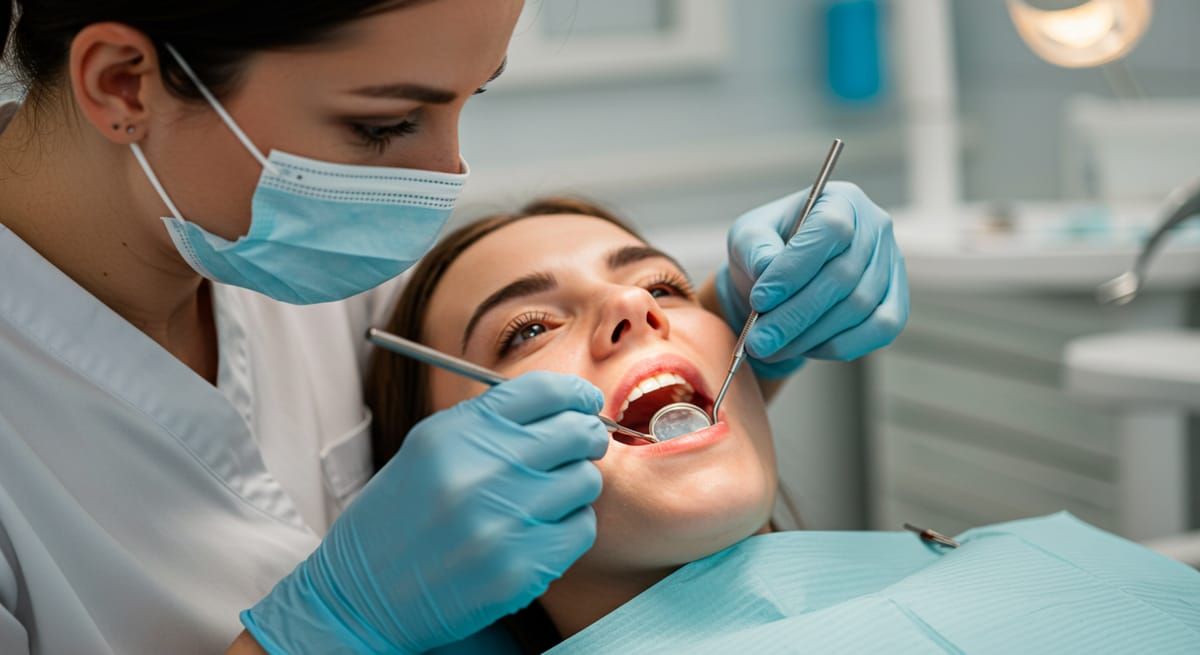
Dentist Phobia: 5 Tips to Overcome Your Fear
Also called dentophobia (or odontophobia), fear of the dentist is a particularly widespread apprehension that would concern nearly 54% of French people according to recent surveys. In the most marked situations, it can go as far as refusal of care, with real repercussions on health. Putting off the management of a cavity can indeed prove to be heavy with consequences. To avoid this kind of vicious circle, there fortunately exist simple methods to ease the anxiety of the most reluctant patients to settle into the chair.
Do not hesitate to talk about it
To lighten their anxiety, people prone to this phobia have every interest in expressing it. The first interlocutor is the dentist himself: exchanging with him about the fear experienced helps to establish a more relaxed climate and to lower the tension. When the situation is very severe, to the point that simply making an appointment represents an impossible ordeal, it is judicious to seek support. Consulting a psychotherapist or sharing one's experience with other dentophobes are among the recommended approaches.
Good habits to adopt
Putting in place a small routine to apply before each consultation with one's dentist is entirely possible. All techniques that promote relaxation and reduce tension are to be favoured. Stimulants such as coffee should in particular be avoided, and care should be taken to go to bed early the day before the appointment. In the waiting room, it is useful to seek relaxation: listening to music, immersing oneself in a book or working on one's breathing are good leads. Other approaches such as sophrology or acupuncture also show concrete results in calming stress.
The use of anaesthesia
In the most serious cases, fear of the dentist becomes an obstacle that no medication nor nitrous oxide can lift. It is then relevant to consider an anaesthesia to deal with the patient's anxiety. Neuroleptanalgesia, a light anaesthesia, is increasingly used for this indication. Thanks to sedatives, it helps defuse fears. Dentophobes faced with significant care can favour a general anaesthesia with hospitalisation. This option has the advantages of being painless and of making it possible to treat or extract several teeth during a single intervention.
Getting children used to consultations
Very present from childhood, fear of the dentist tends to extend into adulthood if nothing is put in place. The best way to prevent the youngest from apprehending an appointment is still to familiarise them with the environment of the practice. An annual visit to a dentist in Cannes makes it possible to tame the atmosphere of the place. Once the child's confidence is established, the risk of phobia fades.
Products that facilitate relaxation
The dental surgeon can also prescribe medications with anxiolytic effects that largely contribute to alleviating the fear felt. Conscious sedation by nitrous oxide gives excellent results in phobic people. The Equimolar Mixture of Oxygen and Nitrous Oxide is inhaled for a few minutes using a mask and provides a deep feeling of relaxation. This method has the advantage of being free of undesirable effects and of attenuating moderate pain.