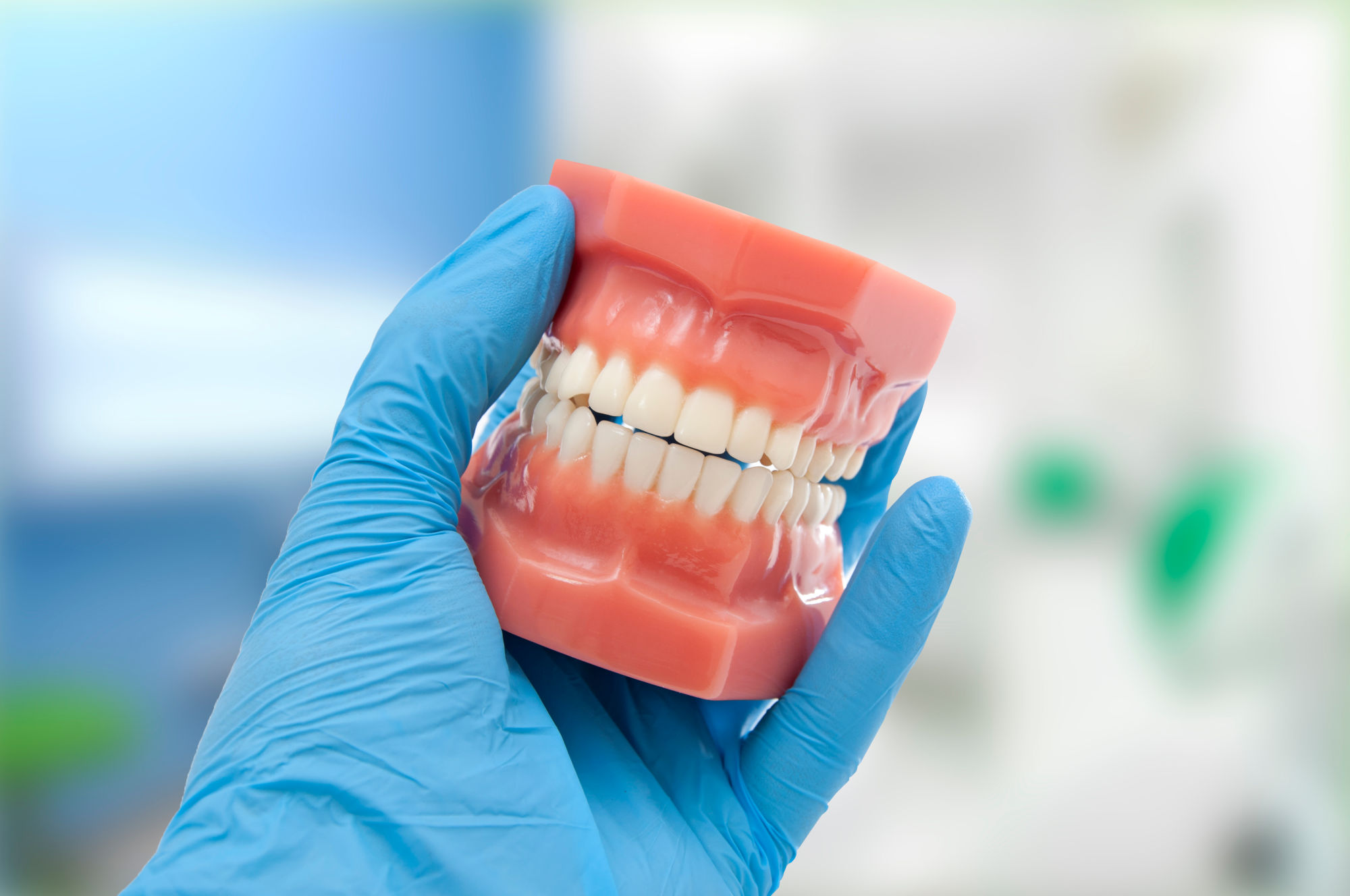
Dental Occlusion
"Dental occlusion corresponds to the correct interlocking of the teeth of the lower jaw with those of the upper jaw. Dental malocclusion can lead to various health problems, notably musculoskeletal disorders."
What is dental malocclusion?
The teeth aligned on the same plane form a set called dental arch. With the mouth closed, for the contacts between the upper and lower dental arches to be perfect, the teeth must be correctly positioned. When this contact between the teeth, designated by the term dental occlusion, is not correct, we speak of dental malocclusion. A poor relationship between the teeth can have serious repercussions, both on oral health and on general health. "Dental malocclusion can indeed be at the origin of migraines, postural imbalances or even musculoskeletal disorders."
When should you consult your dentist?
There are different types of dental malocclusions, whether involving the incisors or the molars. Consulting your dentist or dental surgeon is essential to limit complications. The direction of a malocclusion can be back-and-forth or vertical. The teeth overlap too much, not enough, or sometimes generate a gap between the arches. Depending on the occlusal disorder the patient suffers from, we speak of crossbite, open bite, underbite or overbite. "Only a consultation makes it possible to identify a dental occlusion disorder."
"Asymptomatic at first, a dental malocclusion can lead to long-term health problems."
The first signs of a dental malocclusion are:
- articular crackling noises when opening and closing the mouth;
- painful and sometimes limited oral opening;
- bruxism (teeth grinding);
- headaches;
- migraines;
- dizziness;
- ENT disorders (tinnitus).
If a treatment is not considered at this stage, such as:
- occlusal release splint;
- selective grinding;
- orthodontic treatments;
- treatment of edentulism;
- increase in vertical dimension (height between the two gum ridges).
Then musculoskeletal disorders may appear.
Musculoskeletal disorders linked to dental malocclusion
Certain disorders of dental occlusion do not lead to any particular consequence; others, on the other hand, are at the origin of musculoskeletal disorders. This is, for example, the case when a mandibular imbalance persists over time. "Over the months, in the absence of management by a dentist, this imbalance ends up affecting the entire posture."
The consequences are serious: for example, a disturbance in the position of the skull on the spine, leading to cervical and shoulder pain that can prove disabling in daily life. The worsening of symptoms is inevitable in case of stress or any situation likely to increase the risk of joint pain.
What are the other health problems linked to a dental malocclusion?
In addition to causing musculoskeletal disorders, dental malposition can be responsible for sleep apnea and sleep disorders. Respiratory disorders, speech difficulties or even a dysfunction of chewing or even swallowing are sometimes attributable to a dental occlusion disorder. In certain cases, dento-maxillofacial dysmorphoses are such that they also have aesthetic repercussions.
Any dental occlusion problem justifies a consultation with a dentist or dental surgeon, because only a specialist can correct these malocclusions.