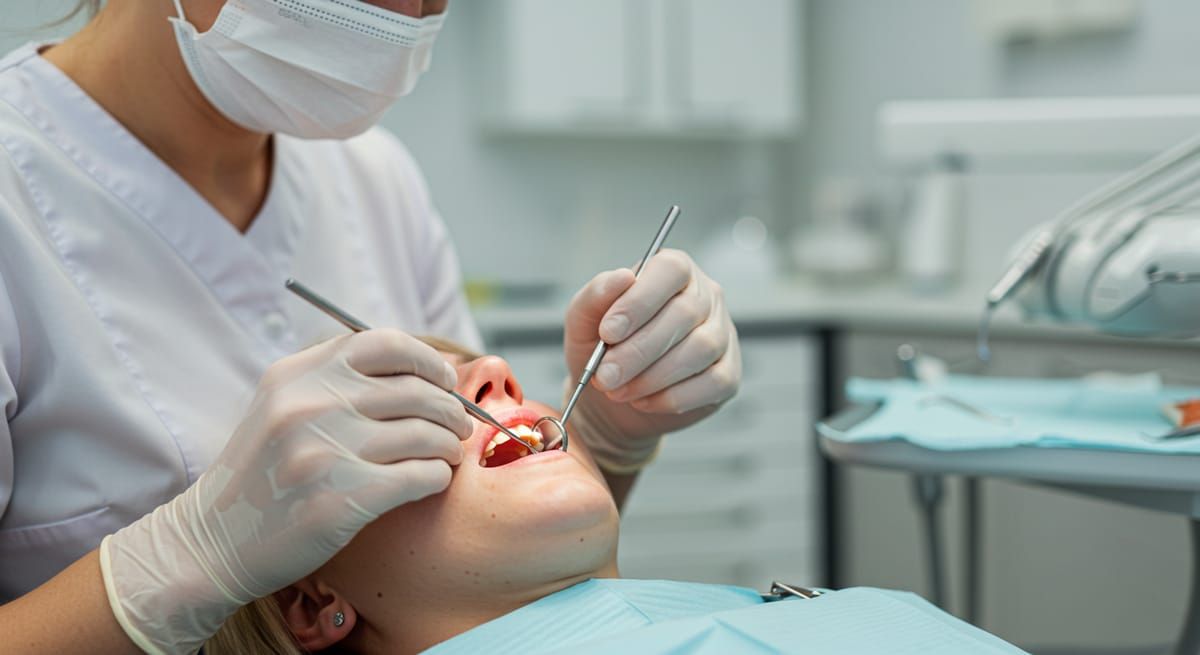
What is Dental Curettage?
Also referred to as root planing, dental curettage is one of the treatments provided by the dentist. This procedure is carried out to slow down the progression and prevent the worsening of periodontitis. It also makes it possible to treat an abscess located inside the gums.
What does dental curettage consist of?
There are two variants of root planing-curettage: closed curettage and open curettage. Closed dental curettage is performed in order to remove the dental plaque and tartar accumulated at the level of the root of the teeth, under the gum. Recommended in patients with periodontitis, this procedure proceeds as follows: after having lifted the gum, the dentist reduces the dental plaque by performing the curettage of the pockets, that is, the spaces that have appeared between the gum and the tooth. The operation is generally supplemented by an irrigation of the periodontal pockets using antiseptics. While this technique cannot, on its own, cure periodontitis, it does make it possible to perfectly clean the root of the teeth and preserve the health of the gums.
Open dental curettage is indicated in case of severe periodontal pathology. The dentist opens and spreads the infected gums to remove the diseased tissues. Once this gesture is carried out, he closes the gum using sutures. This intervention can also serve to treat a periodontal abscess.
Before dental curettage, various treatments must be performed by the patient himself. For example, to favour the elimination of dental plaque, the dentist may prescribe the use of interdental brushes or chlorhexidine-based mouthwashes. The intervention itself is carried out over two to four sessions. If the treatment is spread over 2 sessions, each one lasts, depending on the importance of the periodontal disease, between 45 minutes and 2 hours. Performed under local anaesthesia, root planing does not cause pain. During the procedure, the dentist uses various manual instruments as well as a device emitting ultrasound. Once the curettage is complete, a course of antibiotics is systematically prescribed in order to prevent any risk of infection.
Dental curettage: what are the consequences and precautions to take afterwards?
After root planing-curettage, it is frequent to feel discomfort and slight pain at the level of the gums, sometimes accompanied by minor bleeding. For the patient's comfort and in order to limit the risk of recurrence, different solutions may be indicated by the dentist:
- the use of a non-steroidal anti-inflammatory drug, based on ibuprofen for example, can alleviate the pain;
- a diet made up of soft rather than hard foods contributes to reducing the feeling of discomfort after the intervention;
- very cold or very hot foods and drinks are strongly discouraged. It is moreover recommended to avoid foods containing skins or seeds likely to insert under the gums, such as popcorn or fruits with their skin.
Regarding daily oral hygiene, it is preferable to brush the teeth gently and to use a toothbrush with very soft bristles. To eliminate more dental plaque, it is advised to complement the daily brushing with the use of interdental brushes or silk dental floss. The use of an antiseptic mouthwash is also recommended to accelerate the healing process. In case of significant dental sensitivity, the use of a desensitising toothpaste may prove an effective solution.