Dental Crowns
The dental crown is one of the most often offered dental prostheses by dental surgeons.
What is a dental crown?
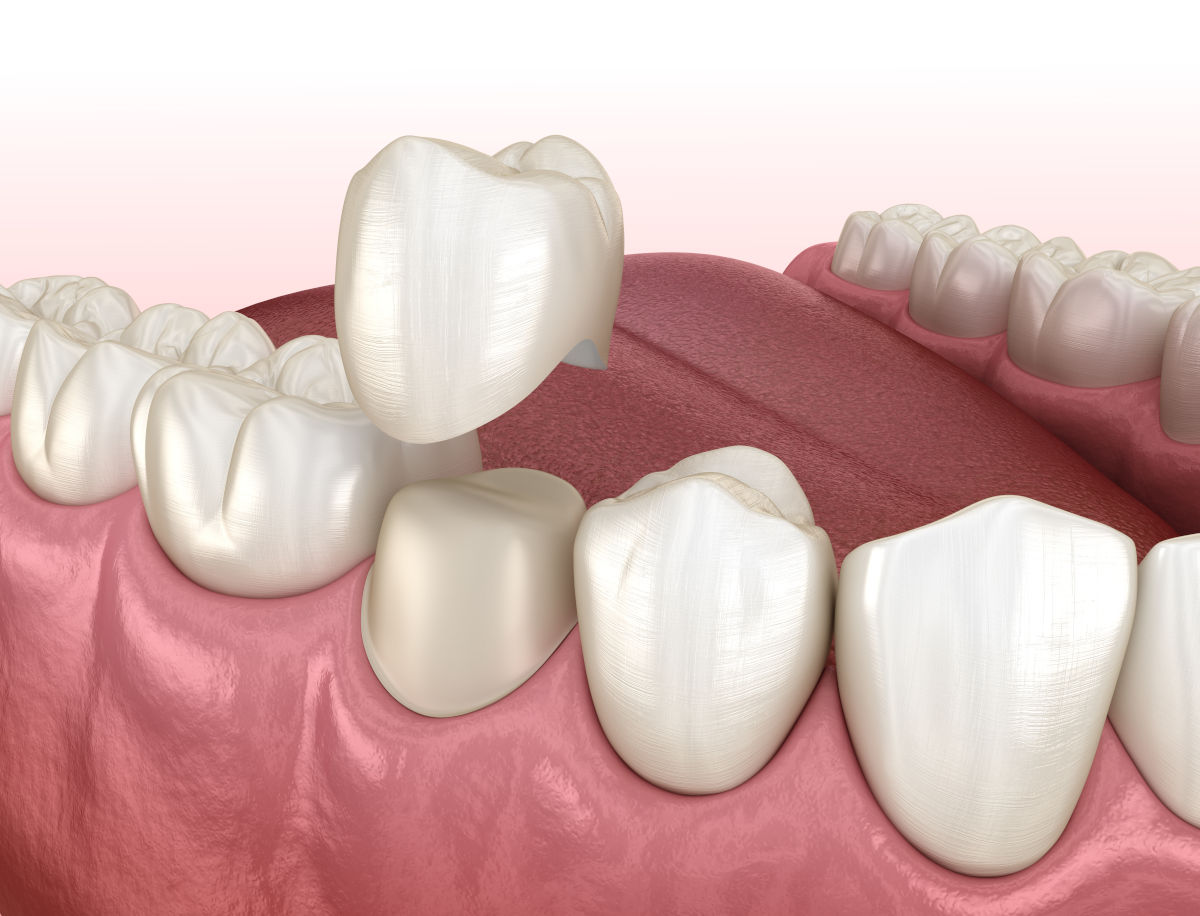
The dental crown takes the form of a small cap that envelops and entirely covers the natural tooth. Used in aesthetic dentistry, it constitutes, in many situations, the restoration solution best suited to severely damaged teeth deprived of sufficient dental structure, to the point that they can no longer accommodate other treatments such as an amalgam or a veneer. The root of the tooth must however remain usable. This artificial crown comes to consolidate the tooth and improve its appearance, particularly when several of its faces require reconstruction.
The different types of dental crowns
Dental crowns can be made from several materials, each with its own characteristics. Their manufacture is done either directly in the practice thanks to a digital impression of the patient's dentition, or in the laboratory after the production of a conventional impression of the tooth to be crowned as well as of the other teeth of the mandible and the maxilla.
Provisional resin dental crown
This crown's role is to protect and immobilise the tooth while preparing the gum during the various stages of manufacturing the definitive crown.
Metal dental crown
Although of satisfactory quality, this type of prosthesis remains inexpensive but offers a less advantageous aesthetic result. The metal crown is generally reserved for teeth located outside the visual field. Its price and its shade vary depending on the metal used.
Porcelain-fused-to-metal dental crown
This type of crown consists of a metal structure covered with a layer of ceramic whose shade is close to that of natural teeth. The presence of metal under the ceramic may however, in certain cases, confer on the prosthesis a level of translucency slightly different from that of the natural dentition.
All-ceramic dental crown
This is a crown equipped with a latest-generation ceramic framework, highly resistant, covered with a cosmetic ceramic whose shade is identical to that of natural teeth. These metal-free prostheses are distinguished by their superior aesthetics and better biocompatibility than porcelain-fused-to-metal crowns.
The stages of placing a prosthetic crown
Here are the different phases that punctuate the placement of a crown:
- Preparation of the tooth, then placement of a provisional resin crown;
- When the tooth is severely decayed, installation of a post inside it, either directly or from an impression taken inside the root;
- Taking a dental impression, then transmission to the prosthetist responsible for designing the definitive crown;
- Trial fitting then placement of the definitive dental crown.
Note also that Social Security and, even more so, complementary insurance participate in the reimbursement of the placement of a prosthetic crown, in the same way as that of a dental implant.